


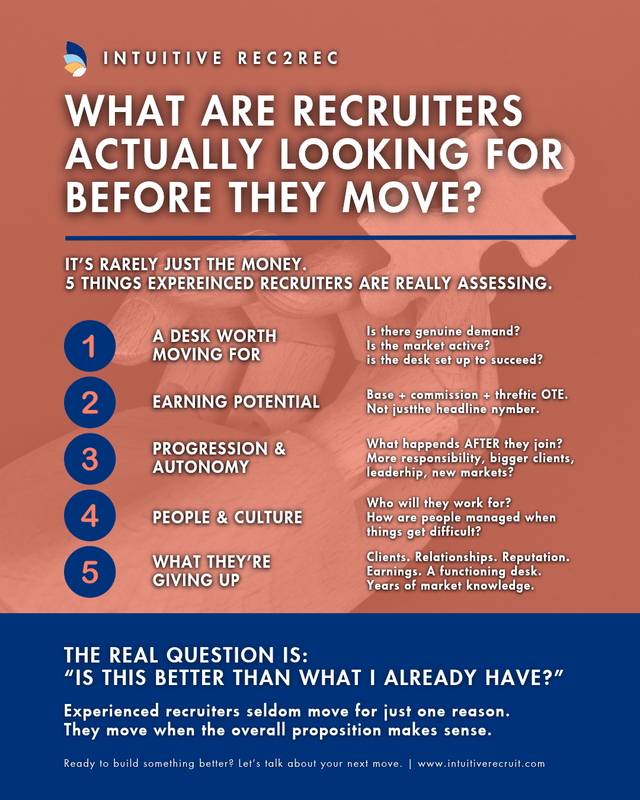
An Intuitive Rec2Rec snapshot of recruiter decision-making in the Asian market
Experienced recruiters are pretty good at spotting a job that looks better on paper than it is in reality.
A bigger title, higher salary or impressive company name might get attention. But when someone is seriously considering a move, the real question is usually:
“Is this opportunity genuinely better for me than where I am now?”
Our research and conversations across the recruitment market point to five recurring factors.
1. A desk worth moving for
For experienced recruiters, the opportunity itself matters as much as the employer.
Is there genuine client demand? Is the market active? How established is the desk? What support is available? How much of the role is delivery versus new business?
A strong recruiter can still struggle on a weak desk.
2. Earning potential, not just the salary
Salary gets attention. Commission tells recruiters much more.
Experienced recruiters look beyond the headline package to understand the base, thresholds, commission structure and what people can realistically earn.
A big OTE on a job description means very little if nobody actually gets close to it.
3. Progression and autonomy
“There’s lots of progression” isn’t really a career proposition.
Recruiters want to know what happens next. Can they build a team, take on larger clients, develop a specialist desk, expand into another market or increase their responsibility and earnings?
And just as importantly: how much autonomy will they actually have?
For someone already established in recruitment, doing the same job somewhere else needs a compelling reason.
4. The people and culture behind the role
The manager matters. So does the reality of the culture.
Experienced recruiters are likely to think about what happens when a month goes badly, a client pulls a role, targets aren’t hit or someone challenges a decision.
“Great culture” on a careers page is easy.
What happens on a difficult Monday is much more revealing.
5. What they’re giving up
This is the part that can easily get overlooked.
Moving may mean leaving established clients, relationships, a functioning desk, colleagues, reputation, market knowledge and a level of earnings that took years to build.
So the new opportunity isn’t competing against other vacancies.
It’s competing against the recruiter’s current situation.
That is a much higher bar.
The Intuitive view
Experienced recruiters rarely move because of one isolated factor.
A higher salary may not compensate for a weak desk.
A great brand may not compensate for poor management.
A strong commission plan may not compensate for limited progression.
The decision is usually about the overall proposition.
As recruiters start thinking about 2027, perhaps the more useful question isn’t:
“Should I move?”
It’s:
“What would need to be better for me to move?”
Knowing that answer before the conversation starts puts a recruiter in a much stronger position.